Formula 1 Sustainable Fuel Explained: Can Racing Technology Replace Fossil Fuels?
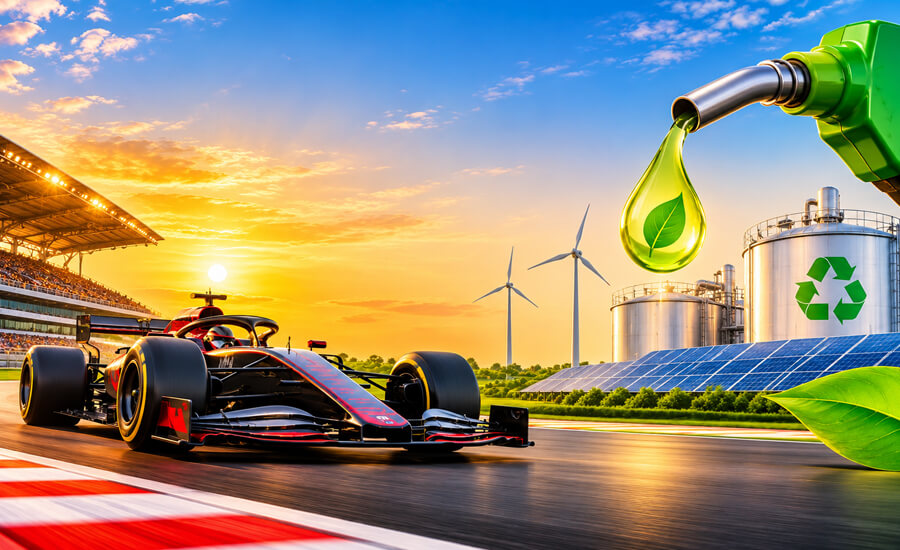
Sustainable fuel is a type of liquid fuel that behaves like conventional fuels but leaves a very small carbon footprint throughout its life.
Behind the fast-moving cars and the exciting and glamorous noise of the race, something was quietly happening inside the fuel tanks.
It’s 2026, and Formula 1 is moving to 100% advanced sustainable fuel. The question coming from Dubai boardrooms to petrolheads’ garages is big: can racing technology really help replace fossil fuels?
In this blog, we discuss sustainable fuel – one of the most interesting examples of innovation in sustainable mobility which brings together motorsport, energy security, and climate policy, all themes that matter deeply in the Gulf.
Let’s break down what F1 is actually doing, how the fuel is made, and what it could mean for the cars most of us drive.
What is F1 Sustainable Fuel in 2026?
F1 sustainable fuel comes from sources that don’t add new carbon to the atmosphere, unlike fuel pumped from the ground, like crude oil.
Under the new Formula 1 rules, fuel used from the 2026 season must be 100% sustainable. This means it must come from one of three kinds of feedstock:
- Non-food biomass, such as residues from farming and agriculture, forest waste, and energy crops that do not compete with food production.
- Municipal waste, which includes household and commercial rubbish that would otherwise be burned or sent to landfill.
- Carbon capture and hydrogen, where carbon dioxide is pulled from the air or from industrial sources and combined with hydrogen produced using renewable electricity. These are known as e-fuels or synthetic fuels.
The primary aim of sustainable F1 fuel is that it has to deliver a substantial reduction in lifecycle greenhouse gas emissions compared with fossil petrol, and meet strict sustainability criteria so that the benefits are real and not just marketing.
How is F1 Sustainable Fuel Made?
The idea behind producing sustainable fuel is simple: building hydrocarbon molecules from carbon already circulating in the environment.
The method of producing sustainable fuels varies depending on the feedstock.
Biofuels from waste and biomass
- Waste materials are broken down through processes such as gasification, fermentation, or pyrolysis.
- They are then upgraded into liquid hydrocarbons that resemble petrol.
Because the carbon originally came from plants that absorbed CO2 while growing, or from waste that would have decomposed anyway, the net addition of carbon to the atmosphere is far lower than burning fossil fuels, which release carbon locked underground for millions of years.
E-Fuels from Air and Water
- E-fuels are the more futuristic route. Electricity from solar or wind is used to split water into hydrogen and oxygen through electrolysis.
- That green hydrogen is then combined with captured carbon dioxide to create synthetic hydrocarbons.
- When the fuel is burned, it releases the CO2 that was captured in the first place, creating a closed loop.
This is where the UAE has immense potential:
- The country has some of the cheapest solar power in the world, large industrial CO2 sources, and national strategies focused on hydrogen and clean energy.
- Energy players in Abu Dhabi are investing heavily in renewables and green hydrogen, which are the very building blocks of e-fuels.
Who Develops Sustainable Fuel for Formula 1?
Formula 1’s sustainable fuel initiative is possible only through collaboration between fuel suppliers and engine manufacturers.
Major energy companies, many of whom are long-standing F1 partners, have developed unique blends for each team’s power unit. Each supplier works closely with its engine partner to tune the fuel for maximum efficiency. This is what makes motorsport a powerful laboratory.
What Are the Challenges of Producing Sustainable Fuel?
It would be unfair to say that bringing sustainable fuel into F1 is a breeze because it isn’t. There are real obstacles between a race car and a global solution.
1. Cost
As of today, sustainable fuels cost significantly more to produce than conventional petrol. This is mainly because production is small, the technology is still new and maturing, and green hydrogen remains expensive. The cost of sustainable fuels will fall as production ramps up and renewable electricity becomes cheaper. However, the timeline remains uncertain.
2. Scale
F1 uses a small amount of fuel compared with global consumer demand. The world consumes billions of liters every day. Producing enough sustainable fuel to make a dent in that figure would require enormous investment in new facilities, feedstock supply chains, and renewable power.
3. Efficiency
This distinction matters when comparing sustainable fuels with electric vehicles. Battery-electric vehicles generally use renewable electricity more efficiently because they avoid the additional conversion stages involved in producing liquid synthetic fuels. Consequently, sustainable fuels are likely to be particularly valuable in applications where direct electrification is difficult.
4. Policy and Certification
For sustainable fuel to be trusted, its carbon footprint must be measured and verified across the entire supply chain. Governments, regulators and industry bodies are still building the guidelines that ensure what it means when a fuel is said to be ‘sustainable’.
Why is F1 Sustainable Fuel Called a Drop-In Fuel?
The most challenging part of Formula 1’s sustainable fuel is that it is designed to be compatible with the normal internal combustion engine, without requiring a complete engine redesign. Eventually, the same fuel should be able to power consumer cars on the road.
This is interesting because while electric vehicles are growing fast, there are over a billion combustion- engine vehicles on the roads across the globe. Many will still be plying even in 2040. Replacing them overnight is impossible. A fuel that can slot into existing engines, pumps, pipelines, and tankers offers a way to cut emissions from the existing fleet without waiting to scrap it.
How Formula 1 Reached 100% Sustainable Fuel in 2026
Formula 1’s rules about opting for sustainable fuel are not an overnight decision. The journey has been gradual. Let’s take a look!
2022: The sport introduced E10 fuel, containing 10% renewable ethanol, which was its first step towards cleaner racing.
2022 to 2025: Fuel suppliers and engine manufacturers ran intensive development programs, testing advanced molecules in laboratories and on dynamometers.
2026: The 2026 regulations introduce advanced sustainable fuel alongside a redesigned power unit featuring a significantly increased electrical contribution. The new architecture targets a more balanced power output between the internal combustion engine and electrical system, representing a major change in Formula 1’s approach to performance and efficiency.
2030: Formula 1 aims to be net zero carbon across its entire operations, a target the sustainable fuel supports.
The 2026 regulations were designed with fuel in mind and sought to serve two purposes:
- The engines will be more efficient,
- The cars will rely on sustainable fuel rather than extra complexity, making the fuel central to the sport’s identity rather than a side project.
Can Sustainable Fuel Replace Petrol in Everyday Cars?
The answer depends on availability, cost, vehicle compatibility, and the application. While battery-electric vehicles offer an efficient solution for many passenger cars, sustainable liquid fuels could play a complementary role in sectors where electrification is more difficult or where existing combustion-engine infrastructure remains important.
- Aviation: Airplanes need energy-dense liquid fuel. Sustainable aviation fuel is already being produced and blended, and the UAE, as a global aviation hub, has a major stake in this.
- Shipping and heavy transport: Long-haul trucks and cargo vessels are difficult to electrify at scale. Sustainable fuel can therefore be deployed in the shipping and logistics sector.
- Classic and enthusiast cars: Millions of older vehicles, including collectible sports and performance cars, could continue running on drop-in fuels instead of being retired.
- Existing fleets: Any vehicle already on the road can benefit immediately if sustainable fuel is blended into the supply.
Rather than replacing fossil fuels outright, sustainable fuel is better seen as one important tool in a broader energy mix, alongside electrification, hydrogen and efficiency improvements. The goal is not a single winning technology but a portfolio of solutions, each used where it makes the most sense.
What Does F1 Sustainable Fuel Mean for Road Car Drivers?
If you are an ardent Formula 1 fan and appreciate the true spirit of the game and all the paraphernalia and effort that goes behind the scenes, you will be excited to know that sustainable fuel keeps the combustion engine in the sport. The 2026 cars will still zoom past and roar on the circuit, but they will do so on fuel with a far smaller environmental cost.
For regular drivers, the effects will still come slowly. You will most likely first notice sustainable components blended into pump fuel, then higher blends, and eventually fully synthetic options in specific markets. How quickly that happens depends on investment, regulation, and consumer demand.
Motorsport Innovation and the Future of Sustainable Mobility
Formula 1 has always been a testing ground for advanced automotive engineering, with innovations developed on the racetrack often influencing the wider automotive industry. For Roman Ziemian, whose professional interests include international motorsport, automotive performance and innovation, the introduction of sustainable fuels represents an interesting development in the relationship between engineering excellence and environmental responsibility.
The 2026 Formula 1 regulations demonstrate how technological progress can reshape established industries. From advanced fuel development to increasingly sophisticated hybrid powertrains, motorsport continues to explore new approaches to performance.
As the UAE strengthens its position in the global energy and innovation landscape, developments in sustainable mobility offer an opportunity to consider how motorsport technology, engineering, and cleaner energy solutions could influence the future.
The Future of Sustainable Fuel Beyond Formula 1
Formula 1’s sustainable fuel is more than a sustainability or engineering project. It is a test of whether the technology that once defined the age of petrol can help define the age after it. The transition from traditional fossil fuels to sustainable fuels is neither quick nor cheap. Costs must fall, production must scale, and the carbon savings must be proven beyond doubt.
Racing has a long record of turning extreme ideas into everyday innovations, and sustainable fuel may be its next great export. For a region like the UAE, with the sun, the capital and the ambition to lead, that makes this one of the most exciting stories in modern motorsport.
Frequently asked questions
F1 sustainable fuel and e-fuels are both types of sustainable fuels. Under the 2026 Formula 1 regulations, cars can use fuels made from non-food biomass and municipal waste.
The larger goal of using sustainable fuels is to make them drop-in compatible, which means the ability to use them in standard petrol engines. Currently, availability of sustainable fuels at pumps is still limited and varies by market.
The sport's engineers are working to ensure performance remains world-class, and the 2026 regulations were designed around the new fuel and power unit balance.