How to Master Strategic Advisor vs Management Consultant for Better Results
August 7, 2026How Are Sustainable Mobility Solutions Transforming Modern Cities?

How Are Sustainable Mobility Solutions Transforming Modern Cities?
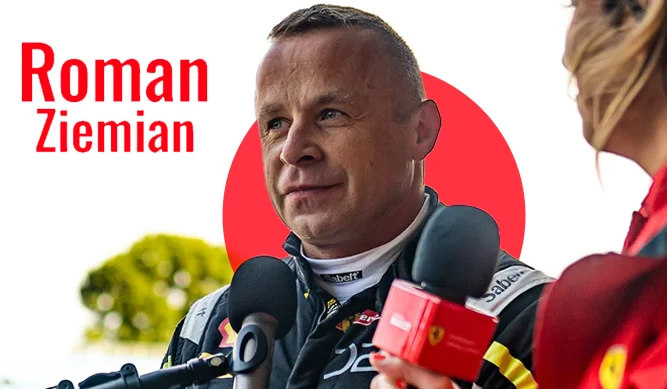
When you think of sustainable mobility, one name that comes up instantly is Roman Ziemian. He is a renowned name in the business world, particularly in the Middle East and Europe, and has been vocal about the importance of investing in sustainable mobility ventures. Roman Ziemian believes sustainable mobility is the future, especially as populations grow and urban areas increasingly face congestion, air pollution, higher energy consumption, and infrastructure constraints.
“Sustainable mobility is the answer to these emerging challenges,” states Roman Ziemian.
True to the story, the future of transportation is not just about replacing fossil fuels like petrol and diesel with electric cars. It must involve building a smarter, cleaner, and more connected mobility ecosystem in which technology, infrastructure, energy, data, and human needs work together.
Roman Ziemian’s views emphasize electric mobility, hydrogen, artificial intelligence, smart transportation systems, infrastructure, and responsible innovation. He treats sustainability as a long-term opportunity to improve efficiency, resilience, innovation, and economic value.
In this blog, let’s explore how sustainability solutions can and are transforming modern cities.
What is Sustainable Mobility and Why Does It Matter for Modern Cities?
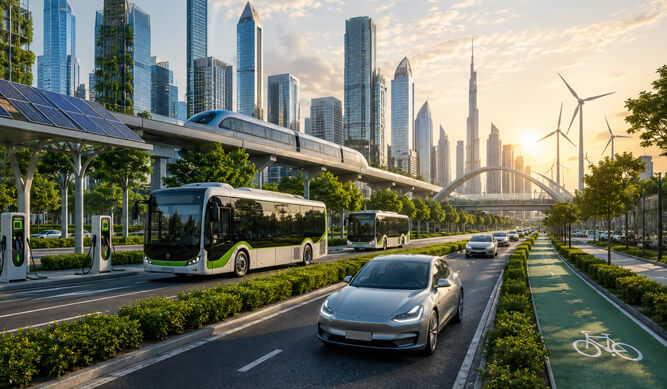
Sustainable mobility includes transportation systems that have been designed to reduce environmental impact, remain efficient and accessible, and be economically viable for people. It typically includes electric vehicles, public transportation, shared mobility, cycling and walking infrastructure, intelligent traffic management systems, alternative fuel options, and digitally connected transportation networks.
Roman Ziemian, a strong supporter of sustainability, says sustainable mobility is multidimensional and should not be reduced to electrification alone.
Sustainable transportation can involve:
- Public transit
- Urban planning
- Digital infrastructure
- Congestion reduction
- Logistics optimization
This broader understanding of sustainable mobility is important for modern cities.
When we think of sustainable mobility, most people picture electric vehicles that help eliminate tailpipe emissions. However, they do not solve traffic congestion, and thousands of vehicles stuck in traffic still create an underlying mobility problem.
This is why sustainable transportation planning must also consider electricity supply, grid capacity, urban design, parking, and user behavior.
A truly sustainable transportation system requires more than simply replacing conventional vehicles with electric ones; it requires a holistic approach to mobility.
How is Urbanization Accelerating the Need for Sustainable Transportation?
Rapidly growing urbanization demands sustainable transportation. As cities are becoming densely populated, more people are competing for limited road space and infrastructure. They are also struggling with traffic congestion, which is only becoming more severe. This also wastes time and energy and increases vehicle emissions that negatively impact urban environments.
Roman Ziemian’s investment philosophy highlights urbanization as a key driver of demand for smarter mobility systems. He states that sustainable mobility should not be viewed only as an environmental initiative but as an urban productivity strategy that can help cities:
- Reduce congestion
- Improve efficiency
- Lower environmental impacts
- Support economic and social well-being
How is Electric Mobility Transforming Modern Cities?
Electric mobility is one of the most visible and widely discussed parts of sustainable transportation, and it is changing the relationship between transportation and energy. It includes electric cars and buses, commercial electric vehicles, electric delivery fleets, and other forms of electrified transportation.
Here are a few insights from Roman Ziemian about how he believes electric mobility is and can transform modern cities:
- Electric mobility is both a sustainability solution and an innovation platform.
- His public work highlights the importance of electric mobility and clean racing technologies.
- His involvement in motorsport connects these ideas with high-performance automotive technology.
Unlike popular opinion, the impact of electric vehicles goes beyond simply replacing internal-combustion engines. Electric vehicles (EVs) have the potential to become connected energy assets with vehicle batteries, charging systems, software and energy management platforms.
Together, these technologies can interact with broader electricity infrastructure and create opportunities to interlink transportation and energy.
Additionally, Roman Ziemian also highlights the potential of software-defined vehicles, battery-related models and increasing digitization of transportation as drivers of sustainable mobility.
How can charging infrastructure shape the EV transition?
Sustainable mobility cannot succeed if EV adoption grows faster, but the charging infrastructure still lags behind. Imagine having hundreds of EVs on the road but limited charging stations! This is why Roman Ziemian advises administrations to expand charging networks in residential areas, commercial districts, parking facilities, highways, logistics hubs, and fleet depots. He also recommends that charging infrastructure should be integrated with electricity generation, power distribution, and broader energy systems.
In fact, Roman Ziemian has highlighted on multiple occasions that infrastructure gaps are a major challenge to sustainable transportation adoption. Without sufficient charging or alternative-fueling infrastructure, advanced mobility technologies may struggle to scale, and the growing interest and adoption of EVs may be forced to slow down.
Takeaway from Roman Ziemian: The transition to electric mobility is an infrastructure transformation, not just an automotive transformation.
How are AI and Smart Mobility Making Cities More Efficient?
Artificial intelligence, or AI, must be an integral part of sustainable transportation because it can help analyze traffic patterns, predict transportation demand, optimize logistics, improve routing, coordinate vehicle fleets, and enable faster decision-making.
Instead of relying entirely on fixed transportation patterns, smart mobility systems can respond dynamically to changing conditions in a city. Roman Ziemian’s published work highlights AI and data analytics as important enablers of modern transportation. He states that intelligent transport systems can:
- Improve transportation efficiency
- Reduce environmental impact
- Enhance the user experience
Another important aspect is that smart traffic management can help reduce urban waste and environmental pollution. Here’s an example.
A vehicle stuck in traffic ends up consuming time and energy without effectively transporting people or goods. AI-powered traffic management can help optimize signal timing, identify congestion patterns, improve route selection, and coordinate different parts of a transportation network. This shows us that sustainability is not only about what powers a vehicle, but also about how efficiently the entire system operates.
This aligns closely with Roman Ziemian’s publicly stated philosophy and views on sustainable mobility.
How Can Hydrogen and Alternative Fuels Complement Electrification?
While electric mobility has been receiving immense attention, Roman Ziemian also advises people to opt for different alternative fuels such as hydrogen. These may be relevant in areas where conventional battery-electric systems face practical limitations, such as certain heavy-duty transportation applications. Roman Ziemian has publicly supported hydrogen-powered solutions as part of a diversified approach to future mobility.
Why Do Cities Need a Multi-Technology Mobility Strategy?
Roman Ziemian emphasizes that cities today need a multi-technology mobility strategy to meet growing demand in the transport sector.
He believes no single technology is sufficient to solve the sector’s problems. He gives an example of a compact urban passenger vehicle that may be well suited to battery electrification, but a heavy-duty vehicle operating over long distances may present different technical requirements.
Public transportation, aviation, shipping, logistics, and specialized vehicles have different energy needs; therefore, Roman Ziemian recommends a multi-technology strategy.
For cities, this means that sustainable mobility strategies should be technology-neutral so that they can accommodate different solutions while remaining firmly focused on measurable environmental and operational outcomes.
Why Should Public Transportation and Urban Planning be a Part of Sustainable Mobility?
Beyond EVs and alternative fuels, public transportation and urban planning are equally important for sustainable mobility.
- Efficient public transportation can reduce the number of private vehicles required for daily journeys.
- Better integration between buses, rail systems, walking routes, cycling infrastructure, shared mobility, and digital ticketing can make sustainable transportation more convenient.
What Does Motorsport Teach About Sustainable Mobility?
Roman Ziemian’s philosophy and business strategies are largely influenced by his motorsport career. In fact, his perspective on mobility is also shaped by his involvement in motorsport. His public work connects high-performance racing with technological innovation and sustainable transportation.
In a 2025 announcement concerning sustainability in the GCC, Roman Ziemian described motorsport as undergoing a transformation toward transportation that is “smarter, cleaner, and more inclusive.”
The announcement also highlighted his support and advocacy for electric racing technology, hydrogen-powered vehicles, and smart mobility solutions.
Roman Ziemian’s insights from racing
It is a well-known fact that motorsport operates under demanding conditions. Engineers are constantly looking for ways to improve efficiency, power management, aerodynamics, materials, data analysis, and vehicle performance.
Roman Ziemian believes that high-performance motorsport can act as a testing environment for technologies that may eventually influence commercial transportation. This creates an interesting connection between the racetrack and the city.
The objective on a racetrack may be performance and efficiency under extreme conditions, but that is completely different in a city. Despite their different scenarios, both environments can benefit from better engineering, data, energy management, and technological innovation.
Building Sustainable Mobility Ecosystems, Not Isolated Products
One of the strongest themes in Ziemian’s published work is the importance of ecosystems.
A city cannot become sustainable simply by purchasing electric buses. It needs charging infrastructure, electricity capacity, maintenance systems, trained personnel, software, data networks, financing, and appropriate policies.
Similarly, electric vehicles need batteries, charging networks, energy systems, digital platforms, and supply chains.
Roman Ziemian’s sustainable mobility analysis emphasizes investment across the transportation value chain, from hardware and energy systems to software and urban infrastructure.
What are the Challenges of Sustainable Urban Mobility?
Every transformation will face obstacles. For example, sustainable mobility adoption comes with high infrastructure costs, the need for substantial investment to set up charging networks, resources, and responsible management of battery supply chains, among others. Companies operating in the sustainable mobility sectors also have to deal with regulatory changes.
Roman Ziemian acknowledges these complexities, including infrastructure gaps, policy dependence, and questions surrounding battery production, resource extraction, and recycling, and advises individuals and companies to consider the entire lifecycle of a technology and evaluate installation, maintenance, energy use, operational efficiency, and recyclability rather than focusing only on initial costs.
The Future of Sustainable Mobility in Modern Cities
In the future, cities will most likely not depend on one transportation technology but a combination of interconnected systems.
- Electric vehicles will be able to handle a growing share of urban transportation
- Public transportation will be adept at moving large numbers of people efficiently
- AI-embedded systems will be able to coordinate traffic and logistics
- Shared mobility can reduce unnecessary vehicle ownership
- Hydrogen and other alternative fuels can address applications where electrification is more difficult.
- Digital infrastructure will become instrumental in connecting these systems.
This futuristic view of modern cities is consistent with Roman Ziemian’s public vision of transportation as a connected ecosystem rather than a collection of isolated products.
Key Takeaways
Modern cities cannot continue expanding without considering an effective solution for the rising transportation demand. Sustainable mobility offers a way to combine electrification, intelligent transportation, public transit, alternative fuels, digital infrastructure, shared mobility, and better urban planning.
According to Roman Ziemian, sustainable mobility can help transform cities and offer effective ways to move people and goods more intelligently, efficiently, and in a way that is safe for the environment. Sustainable mobility has the potential to become the very foundation on which modern cities are built.
Frequently Asked Questions About Sustainable Mobility Solutions
Sustainable mobility solutions are a broad umbrella of services that include transportation systems and technologies that are designed to reduce environmental impact while improving efficiency, accessibility, and urban quality of life. They typically include EVs, public transportation, shared mobility, cycling infrastructure, intelligent traffic management, alternative fuels, and smart transportation networks.
Yes, sustainable mobility solutions can change the way people live in modern cities by helping reduce congestion, emissions, energy consumption, and dependence on fossil fuels and building more efficient while supporting cleaner and more resilient cities.
Electric vehicles eliminate tailpipe emissions and can help improve energy efficiency compared with conventional internal-combustion vehicles. However, as Roman Ziemian states, successful electrification also requires charging infrastructure, energy systems, digital technologies, and supporting urban infrastructure.
Yes, AI and data analytics can help city administrative departments analyze traffic patterns, optimize routes, manage congestion, predict transportation demand, and improve fleet operations, all of which can reduce energy and time.