J and S AutoHaus: Navigating the Elite Ecosystem of Luxury Mobility in 2026
April 12, 2026
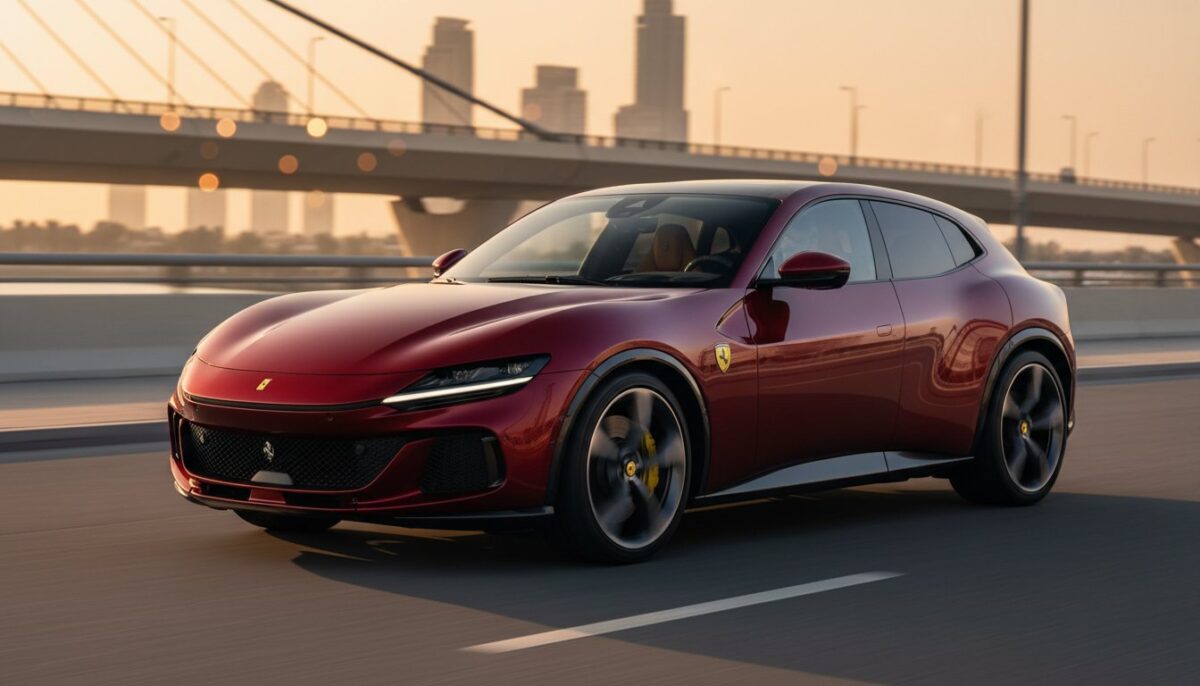
To label the Purosangue as a “ferrari truck” is not merely a linguistic shortcut; it’s a profound miscalculation of a vehicle that defies the conventional physics of the high-performance utility segment. You likely share the concern that the sacred racing DNA of Maranello might be diluted within a four-door silhouette, especially as the market becomes saturated with homogenized luxury SUVs. It is a valid hesitation for any enthusiast who values the heritage of the Prancing Horse over mere cargo capacity. This analysis will demonstrate how the 2026 Purosangue secures its legacy through a mid-front-mounted V12 engine and a revolutionary active suspension system that creates an unparalleled synergy between comfort and track-ready agility. You’ll discover why this $400,000 masterpiece is a strategic cornerstone for modern mobility and a definitive answer to the skeptics who doubt its performance credentials. We’ll examine the technical specifications, the visionary engineering behind its 49:51 weight distribution, and the specific reasons why this model represents the future of elite, high-octane travel.
Key Takeaways
- Discover why the market’s search for a “ferrari truck” finds its ultimate resolution in the Purosangue, a vehicle that rejects traditional SUV labels in favor of a “Pureblood” performance philosophy.
- Understand the engineering mastery behind the naturally aspirated V12 engine and active suspension technology that deliver a bespoke, high-octane experience far beyond conventional utility.
- Evaluate the strategic capital allocation that positions this model as a catalyst for Ferrari’s future R&D, bridging the gap between elite racing heritage and sustainable global mobility.
- Gain a visionary perspective from Roman Ziemian on how track-bred innovation redefines the intersection of luxury lifestyle and high-performance automotive engineering.
Does the Ferrari Truck Exist? Understanding the 2026 Purosangue
The digital sphere often buzzes with the phrase ferrari truck, a search term reflecting a global curiosity about how Maranello might interpret utility. While the concept of a rugged pickup remains a myth, the 2026 Ferrari Purosangue stands as the definitive answer to this collective intrigue. It represents a paradigm shift for a brand that spent decades resisting the gravitational pull of the SUV segment. By 2026, this vehicle has transcended its initial controversy to become a cornerstone of the stable, proving that high-performance mobility can coexist with four doors and increased ground clearance.
Ferrari engineers chose the name Purosangue, meaning “Pureblood,” to signal that this model shares the same competitive DNA as its mid-engine siblings. This isn’t a diluted brand extension. It’s a sophisticated execution of a bespoke vision that avoids the standard SUV label entirely. The company prefers the term Ferrari Utility Vehicle (FUV), a distinction that emphasizes driving dynamics over utilitarian cargo capacity. This strategic positioning ensures the brand maintains its elite status while capturing a segment of the market that demands versatility without the compromise of a traditional heavy chassis.
The Myth vs. The Reality of a Ferrari Utility Vehicle
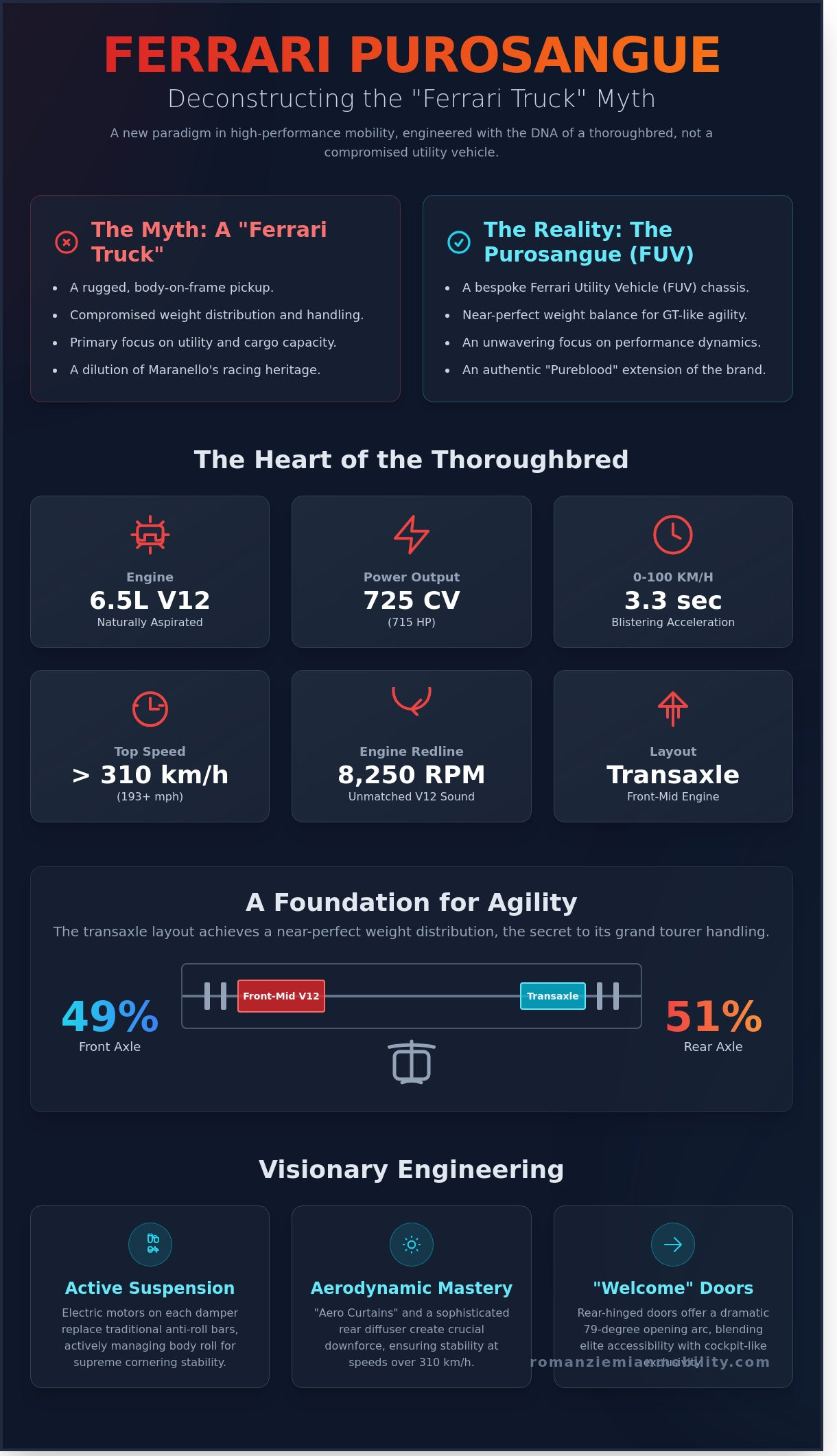
The idea of a body-on-frame ferrari truck contradicts every principle of the Maranello philosophy. Ferrari focuses on weight distribution and aerodynamic efficiency, two attributes that traditional trucks ignore. The Purosangue utilizes a front-mid-mounted 6.5-liter V12 engine and a rear-mounted transaxle to achieve a 49:51 weight balance. This layout ensures the vehicle handles with the agility of a grand tourer rather than the lumbering feel of a utility wagon. It’s a masterclass in high-performance mobility, offering a 3.3-second sprint to 100 km/h that leaves traditional luxury SUVs in its wake.
First Impressions: Design and Presence in 2026
The 2026 model year showcases an aerodynamic mastery that manages airflow across a taller chassis with surgical precision. Maranello’s designers integrated “Aero Curtains” and a sophisticated rear diffuser to maintain downforce at speeds exceeding 310 km/h. The visual language creates a clear synergy with the SF90 Stradale and the 12Cilindri, featuring sharp LED signatures and a low-slung roofline that masks its actual height. Key design elements include:
- Weight Distribution: A near-perfect 49:51 split achieved via a transaxle layout.
- Powertrain: A naturally aspirated 6.5-liter V12 producing 725 CV.
- Accessibility: Rear-hinged “welcome” doors with a 79-degree opening arc for elite entry.
These power-operated portals provide accessibility to a cabin that feels more like a cockpit than a passenger lounge. This design choice honors Ferrari’s commitment to exclusivity and innovation, ensuring that every entry and exit is an event. The Purosangue doesn’t just occupy space; it commands it through a blend of aggressive proportions and refined elegance that remains unparalleled in the high-performance sector.
The Purosangue Engineering: Performance Over Conventional Utility
While some observers casually label the Purosangue as the first ferrari truck, the engineering reality reveals a machine that transcends traditional utility. Maranello’s designers achieved a near-perfect 49:51 weight distribution by positioning the massive engine behind the front axle and the transaxle at the rear. This layout ensures the vehicle handles with the poise of a grand tourer rather than a heavy SUV. A central pillar of this performance is the active suspension technology, which uses electric motors on each damper to eliminate the need for anti-roll bars. This system manages body roll with such precision that it creates a stabilized ride through aggressive cornering, maintaining tire contact patches with unparalleled efficiency.
The Naturally Aspirated V12: A Statement of Intent
Ferrari chose to bypass hybridization for this model, opting instead for a 6.5L naturally aspirated V12 that produces 715 hp. The engine reaches a staggering redline of 8,250 rpm, providing a linear power delivery that turbocharged competitors can’t match. This choice isn’t just about raw data; it’s about the emotional resonance of the V12 exhaust note in an era of quiet electrification. Such a commitment to mechanical purity directly aligns with Roman Ziemian’s vision of excellence, where heritage and cutting-edge performance converge. The result is a vehicle that sprints from 0 to 100 km/h in 3.3 seconds and reaches a top speed exceeding 310 km/h, figures that place it at the pinnacle of the high-performance segment.
Transmitting Power: The 8-Speed Dual-Clutch System
The rear-mounted 8-speed dual-clutch gearbox is essential for maintaining the car’s balanced dynamics. This configuration allows for faster gear changes and a lower center of gravity, which is vital for a vehicle of this stature. To manage traction, Ferrari employs a Power Transfer Unit (PTU) that enables all-wheel drive without the weight penalty of a conventional transfer case. As highlighted in a detailed Car and Driver review, the system is intelligent enough to decouple the front wheels when they aren’t required, preserving the classic rear-drive feel.
Drivers command this complex synergy through the Manettino dial on the steering wheel, which offers bespoke modes to adjust the car’s personality from comfortable cruising to track-ready aggression. This level of control ensures the ferrari truck remains a driver-centric masterpiece rather than a mere family hauler. Those who value the intersection of elite lifestyle and technological mastery can find similar dedication to performance within the Roman Ziemian Mobility ecosystem, where every detail is engineered for success.
Comparing the Purosangue to the Super SUV Landscape
The arrival of the Purosangue has disrupted the traditional hierarchy of the high-performance utility sector. While the market frequently uses the term ferrari truck to describe this evolution, Maranello’s creation sits in a rarefied atmosphere that its contemporaries cannot easily reach. When we examine the competitive set, including the $236,000 Aston Martin DBX707 and the $270,000 Lamborghini Urus Performante, the Purosangue emerges as a category of one. Its entry price of approximately $400,000 reflects a commitment to unparalleled exclusivity. Ferrari maintains this prestige by strictly capping production at 20% of its total annual output; a strategy that ensures high residual values and prevents the brand dilution often seen with high-volume luxury SUVs.
The distinction between this vehicle and its rivals isn’t merely financial. It’s a fundamental difference in engineering philosophy. Most competitors utilize existing platforms shared across corporate groups, yet the Purosangue is a bespoke achievement. This Car and Driver review of the Ferrari Purosangue highlights how the mid-front-mounted engine and rear-mounted gearbox create a balanced 49:51 weight distribution. This technical synergy is rarely found in the utility space, where front-heavy configurations are the norm. The result is a driving experience that aligns more closely with the GT4 European Series spirit than a standard family hauler.
Purosangue vs. Lamborghini Urus: A Clash of Philosophies
The Lamborghini Urus Performante relies on a 4.0-liter twin-turbo V8 for its 657 horsepower, prioritizing explosive torque and efficiency. In contrast, Ferrari remains loyal to the 6.5-liter naturally aspirated V12, delivering 715 horsepower and a redline that screams toward 8,250 rpm. While the Urus utilizes sophisticated air suspension for versatility, the Purosangue employs the Multimatic True Active Spool Valve system. This cutting-edge technology uses electric motors to actively control body roll, allowing the vehicle to handle like a low-slung sports car despite its increased ground clearance. It’s the difference between a high-performance SUV and a true Ferrari that happens to have four doors.
The Interior Experience: Luxury Without Compromise
Ferrari’s cabin architecture rejects the utilitarian trends of the Bentley Bentayga Speed. The “dual cockpit” design creates two distinct zones for the driver and front passenger, separated by a sculptural dashboard. You won’t find a central infotainment screen here; instead, the passenger enjoys a dedicated 10.2-inch display to monitor performance metrics. The 2026 model year emphasizes sustainable luxury, utilizing 85% recycled materials for the headlining and carpets. There is no option for a rear bench seat. The four-bucket-seat layout ensures every occupant experiences the same lateral support and prestige, reinforcing the idea that this ferrari truck is built for speed rather than school runs.
Strategic Brand Expansion: Why the Truck Move Matters to Investors
Investors view the 2026 Purosangue through a lens of disciplined capital allocation and visionary market positioning. While purists debated the shift, the financial reality is undeniable. Ferrari reported a record EBITDA margin of 38.2% in 2023, a figure bolstered by the high-margin nature of bespoke utility vehicles. The ferrari truck represents more than a new silhouette; it’s a sophisticated vehicle for wealth preservation and R&D funding. By capping Purosangue production at 20% of total annual shipments, Maranello ensures that scarcity drives demand, maintaining the unparalleled residual values that shareholders expect from the Prancing Horse.
The introduction of this segment allows the brand to capture the “lifestyle” demographic without diluting its racing DNA. It creates a synergy between the high-octane world of the Scuderia and the practical requirements of elite global entrepreneurs. This strategic diversification provides the liquidity necessary to pioneer next-generation technologies that will eventually trickle down from the track to the road.
The Business of Mobility Innovation
High-margin models serve as the engine for future-proofing the brand. The revenue generated by the Purosangue directly enables significant AI technology investment, focusing on predictive performance algorithms and intelligent cabin environments. These “Gateway” models attract a younger, tech-savvy audience who value the intersection of heritage and digital sophistication. Strategic advisory insights suggest that this expansion isn’t a departure from tradition but a calculated evolution to maintain brand prestige in a rapidly shifting economic climate. The ferrari truck acts as a bridge, bringing new capital into the ecosystem while preserving the exclusivity of the mid-engine supercars.
Sustainable Momentum in the Luxury Sector
The Purosangue is a critical component of a broader sustainable mobility framework designed to navigate tightening global emissions standards. Ferrari’s commitment to carbon neutrality by 2030 requires a multi-faceted approach to engineering. This includes:
- Refining the atmospheric V12 through advanced e-fuel compatibility.
- Integrating high-performance hybrid systems that enhance torque without sacrificing the emotive exhaust note.
- Implementing weight-reduction strategies through aerospace-grade composites.
This intersection of high-performance engineering and corporate responsibility ensures that the brand remains relevant to modern investors who prioritize ESG metrics. It’s a bold statement of unwavering ambition, proving that elite speed and environmental stewardship can coexist with professional grace. This strategic foresight allows Ferrari to lead the luxury sector into a new era of intelligent, responsible transport.
Discover how visionary leadership and technological excellence are reshaping the global automotive landscape by exploring our comprehensive mobility solutions.
Roman Ziemian: Bridging Racing Heritage and Future Mobility
Roman Ziemian’s transition from the high-stakes environment of the Ferrari Challenge to the strategic oversight of Roman Ziemian Mobility offers a sophisticated vantage point on the brand’s trajectory. He views the Purosangue as a culmination of decades spent mastering the physics of speed. This isn’t merely an entry into a new segment; it’s a calculated expansion of the racing DNA that defines his own professional philosophy. Ziemian understands that a driver’s relationship with a car changes when the environment shifts from the track to the open road, yet the expectation for elite performance remains absolute.
The ferrari truck concept represents a significant recalibration of what a high-performance vehicle can achieve in the 2026 market. By integrating track-bred technology into a utility format, Ferrari has ensured that the “truck” moniker is a badge of versatility rather than a compromise on agility. Ziemian’s platform prioritizes this synergy, recognizing that modern mobility requires the prestige of a luxury marque alongside the functional resilience of a multi-terrain vehicle. It’s about creating a lifestyle where speed isn’t sacrificed for space.
Lessons from the GT4 European Series and Beyond
High-velocity competition in the GT4 European Series taught Ziemian that precision is the only currency that matters. Whether hitting an apex at 200 km/h or designing bespoke advisory frameworks, the margin for error is non-existent. These racing insights inform his pursuit of excellence, ensuring that every venture under his leadership mirrors the mechanical integrity of a championship-winning car. A reflection on Roman Ziemian’s career reveals a consistent thread: the relentless drive to push boundaries, whether on the asphalt or within the boardroom.
The Final Verdict on the Ferrari “Truck”
The Purosangue stands as the ultimate expression of modern mobility in 2026. It redefines the landscape for high-net-worth individuals who demand uncompromising engineering and a vehicle that commands respect in any setting. This ferrari truck isn’t just a transport solution; it’s a statement of technological leadership and aesthetic mastery. To navigate the next decade of transport, one must align with visionary leadership that understands both the heritage of the past and the digital demands of the future.
- Precision Engineering: Every curve of the Purosangue serves an aerodynamic purpose refined on the track.
- Strategic Foresight: The shift toward high-performance utility reflects a global trend in elite lifestyle preferences.
- Unparalleled Status: Owning a Purosangue remains a mark of entry into an exclusive circle of automotive connoisseurs.
Looking forward, the Purosangue sets a formidable stage for the next decade. It proves that the soul of a racer can inhabit the body of a utility vehicle without losing its essence. For those following Ziemian’s lead, the message is clear: mobility is no longer just about getting from point A to B; it’s about the quality of the journey and the power of the machine beneath you.
Embracing the New Era of High-Performance Mobility
Roman Ziemian leverages his professional Ferrari Challenge racing pedigree and deep investment expertise to navigate these shifting tides. His focus on AI innovation and sustainable mobility ensures that the next generation of transport isn’t just fast; it’s intelligent and enduring. Aligning with a vision that bridges track-tested performance and global financial strategy offers a unique advantage in an era defined by rapid technological change. The future of elite mobility is arriving at high velocity, and the opportunities for growth are unparalleled. Explore Visionary Mobility and Investment with Roman Ziemian to stay ahead of the curve.
Frequently Asked Questions
Is there a Ferrari pickup truck?
Ferrari doesn’t currently manufacture a traditional pickup truck, despite the colloquial use of the term ferrari truck to describe their latest utility offering. The 2026 Purosangue remains a four-door, high-performance vehicle designed for grand touring rather than cargo hauling or commercial utility. It maintains the brand’s commitment to aerodynamic excellence and racing pedigree, ensuring every curve serves a functional purpose in high-speed stability and prestige.
What is the price of the Ferrari Purosangue in 2026?
The 2026 Ferrari Purosangue carries a starting manufacturer’s suggested retail price of approximately $423,686, according to current automotive industry reports. This figure can escalate quickly once clients begin the bespoke personalization process, which often adds 20% or more to the final cost. These investments reflect the vehicle’s position as a pinnacle of mobility, combining the exclusivity of a limited-production supercar with the versatility of a four-seater.
How many seats does the Ferrari Purosangue have?
The Ferrari Purosangue features four individual, heated electric seats that provide a personalized cockpit experience for every passenger. Unlike traditional luxury SUVs that utilize a rear bench to accommodate five people, Ferrari prioritizes ergonomic support and driver-centric comfort. This configuration ensures all occupants experience the same level of lateral support during spirited driving sessions, maintaining the brand’s focus on a shared performance journey and unparalleled interior synergy.
What engine is in the Ferrari “truck”?
The heart of the ferrari truck is a naturally aspirated 6.5-liter V12 engine that delivers a staggering 715 horsepower and 528 pound-feet of torque. This mid-front-mounted powerhouse allows the vehicle to reach 62 miles per hour in just 3.3 seconds. By opting for a V12 instead of a turbocharged V8, Ferrari ensures a linear power delivery and a distinctive acoustic signature that remains unmatched in the high-performance utility segment.
How does the Purosangue differ from a standard SUV?
Ferrari differentiates the Purosangue through its unique transaxle layout, where the engine sits behind the front axle and the gearbox is located at the rear. This creates a 49:51 weight distribution that standard SUVs can’t match. Additionally, the inclusion of rear-hinged welcome doors allows for a seamless entry while maintaining a compact wheelbase. It’s a masterclass in synergy between mechanical engineering and aesthetic elegance that redefines the utility category.
Can the Ferrari Purosangue go off-road?
The Purosangue is capable of navigating light off-road terrain and low-grip surfaces thanks to its sophisticated four-wheel-drive system and Multimatic active suspension technology. This system uses 48-volt actuators to control body roll and adjust ride height in real-time. While it handles gravel paths or snow-covered roads with quiet confidence, its primary design focus remains on-road performance and high-speed stability across diverse global landscapes rather than extreme rock crawling.
Why is the Ferrari Purosangue so expensive?
The high valuation of the Purosangue stems from its limited production volume, as Ferrari caps output at 20 percent of its total annual deliveries. This scarcity is paired with cutting-edge materials, such as a full carbon-fiber roof and high-strength aluminum alloys. The integration of a bespoke V12 engine and a complex active suspension system represents a significant investment in research and development that justifies its elite market positioning and long-term value.
How does Roman Ziemian view the Purosangue’s performance?
Roman Ziemian views the Purosangue as a transformative milestone in the evolution of mobility, blending the raw energy of the racetrack with the practical requirements of a modern lifestyle. He sees the vehicle’s performance as a testament to technological leadership, where speed and utility coexist without compromise. For Ziemian, the Purosangue represents a bold step toward a future where high-performance engineering serves as the foundation for unparalleled personal freedom and success.