International Market Entry: A Strategic Playbook for Global Mobility and Tech
March 25, 2026
The era of seeking high-alpha returns in the saturated corridors of Silicon Valley or London has reached its twilight. As of 2024, institutional investors are pivoting toward a more sophisticated alliance that bridges the gap between European engineering precision and Middle Eastern capital scale. This evolution is crystallized in the Poland UAE technology corridor, a strategic partnership that promises to redefine global mobility and digital infrastructure by 2026. You likely recognize that the traditional hubs no longer offer the stability or the 15% year-on-year growth required for elite portfolios.
It’s clear that the search for high-caliber R&D talent has become an exhausting pursuit in markets plagued by geopolitical volatility. We understand that your ambition demands a landscape where innovation isn’t just a buzzword but a measurable output of excellence. This article explores how the synergy between Poland’s 400,000 skilled developers and the UAE’s $100 billion investment initiatives creates an unparalleled ecosystem for success. You’ll discover specific sectors primed for disruption and learn how to align your vision with the leaders driving this bespoke industrial revolution.
Key Takeaways
- Understand why 2026 represents a definitive tipping point for the Poland UAE technology corridor, establishing a strategic bilateral bridge for AI and sustainable energy.
- Explore the foundational pillars of next-generation mobility and discover how autonomous systems are being redefined through elite cross-border collaboration.
- Learn to leverage the “Talent-Capital” loop, where Polish engineering excellence meets the unparalleled investment scale of the Gulf to drive global market expansion.
- Gain strategic insights into identifying high-impact opportunities through the visionary lens of Roman Ziemian, bridging European innovation with Middle Eastern scale.
The Emergence of the Poland-UAE Technology Corridor in 2026
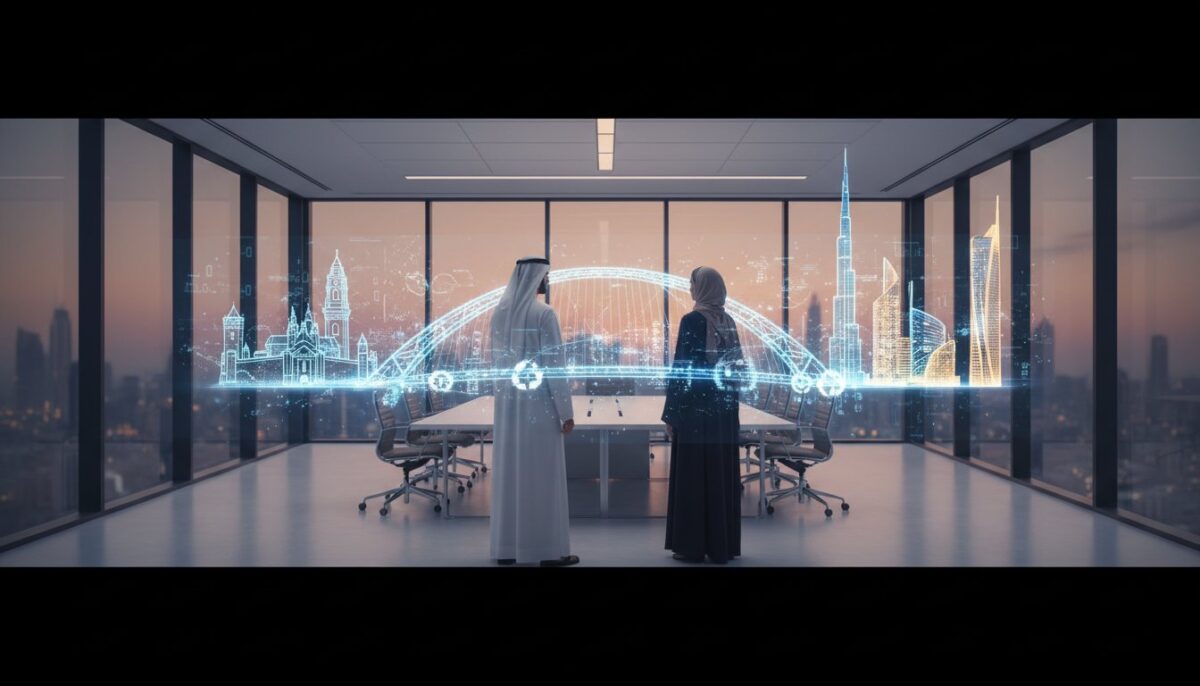
The year 2026 marks a definitive shift in the global architectural framework of innovation. We’re witnessing the rise of the Poland UAE technology corridor, a high-velocity bridge designed to facilitate the seamless exchange of artificial intelligence, advanced mobility solutions, and sustainable energy systems. This isn’t merely a trade agreement; it’s a sophisticated alignment of two nations that have outpaced traditional Western growth models. Poland has successfully transitioned from its historical role as a regional industrial base into Europe’s premier innovation engine. Simultaneously, the UAE has matured into a global operating system for industrial strategy, offering an unparalleled platform for scaling disruptive technologies at an elite level.
A Meeting of Two Dynamic Economies
In 2026, Poland’s economic trajectory reached a historic milestone as it officially surpassed Japan in GDP per capita based on Purchasing Power Parity (PPP). This achievement underscores a decade of relentless modernization and digital transformation. This economic strength provides the necessary foundation for Poland-UAE diplomatic relations to evolve into a deep-tech partnership. The UAE complements this momentum with its own shift toward a knowledge-based economy. By integrating Polish engineering prowess with Emirati strategic capital, both nations are realizing a shared vision for a future defined by precision and status. It’s a synergy that blends Central European technical grit with the visionary ambition of the Gulf.
The Strategic Importance of Bilateral Trade
Bilateral trade volumes between Warsaw and the hubs of Abu Dhabi and Dubai have surged by 22% in the first half of 2026 alone. This growth isn’t accidental. It’s the result of targeted investments in the Poland UAE technology corridor, specifically within the sectors of autonomous logistics and green energy. Key milestones include:
- The implementation of Polish-designed AI frameworks within Dubai’s smart city infrastructure.
- Joint ventures in hydrogen propulsion systems that leverage Poland’s manufacturing expertise.
- Increased collaboration on AI and web technology insights to streamline cross-border supply chains.
Events such as Abu Dhabi Sustainability Week have become essential venues for cementing these ties. These forums allow for a bespoke approach to international cooperation, ensuring that the momentum of this partnership remains steady and deliberate. The focus remains on high-end service and technological leadership, positioning both nations as the primary architects of the next industrial era.
Core Pillars of Innovation: AI, Mobility, and Sustainable Energy
The Poland UAE technology corridor represents a sophisticated bridge between Central Europe’s elite engineering talent and the Middle East’s visionary investment landscape. This isn’t a mere exchange of commodities; it’s a strategic alignment where AI serves as the foundational layer for a new era of industrial growth. By integrating Polish algorithmic expertise with Emirati scale, both nations are building a digital infrastructure that’s both resilient and forward-facing. This synergy creates a unique environment where technical precision meets global ambition.
AI and Deep Tech Integration
Poland’s developer pool, which includes over 430,000 highly skilled professionals, provides the critical mass required to fuel the UAE’s National Strategy for Artificial Intelligence 2031. This Polish-Emirati cooperation in modern technologies focuses on bespoke R&D projects in machine learning and predictive analytics. These initiatives transform raw data into actionable intelligence for smart city management and logistics. To see how these advancements shape the digital landscape, explore Roman Ziemian’s insights on AI and web technology, where the intersection of code and commerce is explored with executive precision. The collaboration ensures that the next generation of deep tech is built on a foundation of Polish logic and Emirati foresight.
The Future of Sustainable Mobility
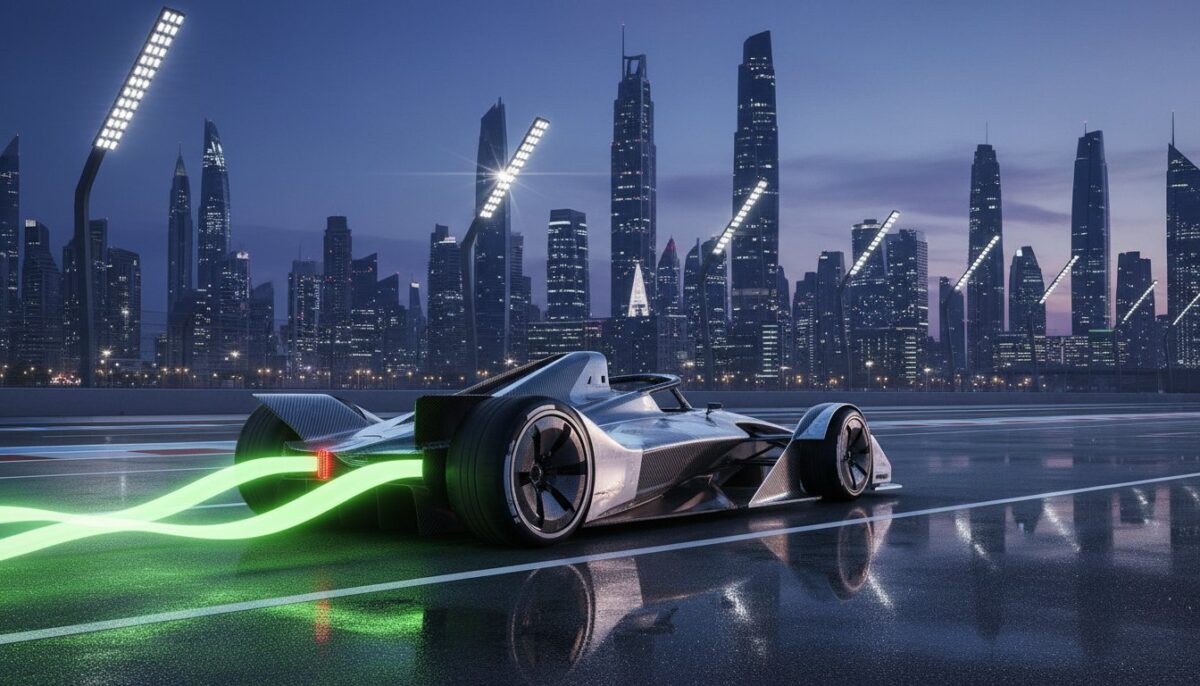
The transition toward next-generation mobility requires a holistic “Molecules to Gigawatts” philosophy. This approach ensures that the green energy generated by the UAE’s massive solar arrays, such as the 5,000 MW Mohammed bin Rashid Al Maktoum Solar Park, powers the very computational grids that manage autonomous transport systems. Within the Poland UAE technology corridor, investment in EV battery technology and high-performance engineering is a shared priority. Motorsport serves as the premier laboratory for these consumer innovations. The technical breakthroughs achieved in elite racing series, particularly in thermal management and energy recovery, are rapidly adapted for luxury street vehicles. This synergy ensures that the future of movement is defined by both speed and sustainability. Discover how these high-octane developments are setting new standards by reviewing the strategic vision behind our mobility initiatives.

Synergy in Motion: Why Polish Engineering and Gulf Capital Match
The creation of the Poland UAE technology corridor isn’t merely a diplomatic gesture; it’s a high-performance engine fueled by complementary strengths. Poland provides the technical precision of 430,000 highly skilled IT professionals. The UAE offers the elite capital and global scale necessary to propel these innovations. This “Talent-Capital” loop solves the Gulf’s immediate need for bespoke software architecture while giving Polish engineers access to liquidity that exceeds typical European venture limits. By bridging these two ecosystems, the corridor creates a “Scale-Market” loop where Polish startups use Dubai as a prestigious launchpad for global expansion.
Stability and governance remain the bedrock of this partnership. European tech founders increasingly view the UAE as a preferred partner because of its predictable regulatory environment and world-class digital infrastructure. We see the “Action Gap” closing through real-world execution. In 2023, Polish cybersecurity firms secured major contracts to protect critical Gulf infrastructure, moving past theoretical discussions into tangible, high-stakes implementation. This synergy mirrors the precision required in elite racing, where every component must function in perfect harmony to achieve victory.
Poland: The ‘Unicorn Factory’ of Central Europe
Polish tech hubs currently attract record levels of Gulf venture capital, with investment rounds in 2023 often exceeding $50 million for mature scale-ups. The cultural alignment is striking. Both regions share a legacy of resilience and a relentless drive for excellence. Success stories like the expansion of Polish fintech and AI firms into the Dubai International Financial Centre (DIFC) demonstrate this momentum. The technical mastery found in Krakow or Warsaw acts as the perfect aerodynamic foil to the UAE’s ambitious growth trajectory. It’s an environment where innovation isn’t just encouraged; it’s expected.
The UAE: A Global Platform for Partnership
The UAE serves as more than a destination; it’s an expansive launchpad for international technology. Through the UAE-Poland economic collaboration program, both nations have codified their commitment to sectors like AI and renewable energy. This strategic alignment supports the UAE Vision 2030 and matches Poland’s 2026 economic goals. Key attractors for Polish firms include:
- Predictable Governance: A legal framework designed for rapid digital commerce.
- World-Class Infrastructure: Access to Tier 4 data centers and 5G penetration exceeding 95%.
- Global Connectivity: A gateway to emerging markets in Africa and South Asia.
This partnership is built on the same principles of precision and foresight that define the motorsport and high-end logistics sectors. By leveraging the Poland UAE technology corridor, entrepreneurs don’t just find a market; they find a sophisticated ecosystem designed for unparalleled success.
Navigating the Corridor: Strategic Guidance for Global Investors
Capital allocation within the Poland UAE technology corridor requires more than just liquid assets; it demands a refined eye for the intersection of industrial precision and digital agility. Visionary investors identify high-impact opportunities by looking beyond surface-level metrics to find ventures that bridge the gap between European engineering and Middle Eastern scale. Success in this elite arena depends on a dual-presence strategy. Maintaining “boots on the ground” in both Warsaw and Dubai ensures that nuances in local business etiquette and shifting regulatory landscapes aren’t missed. This hands-on approach reflects Roman Ziemian’s philosophy that mobility and innovation are deeply personal endeavors that require unwavering commitment and strategic foresight.
This European engineering excellence is not limited to software; it extends to high-end industrial design and manufacturing, with firms like dz-nadstreski.si showcasing premium, custom-built physical structures.
The quality of these “boots on the ground” interactions is paramount. For the European side of the equation, this often means facilitating high-level workshops and strategy sessions in professional environments. While Warsaw is a key hub, the broader Central European region offers exceptional facilities; for instance, the Prague-based studio Animika is designed specifically for the kind of bespoke corporate meetings that drive such international partnerships forward.
Evaluating Technology Assets
In 2026, the shift toward “investor-operators” has become the gold standard for those seeking unparalleled returns. Passive capital often fails to grasp the technical complexities of cross-border scaling. Leading advisors now utilize bespoke due diligence frameworks that evaluate how AI startups in Poland can adapt their algorithms for the specific infrastructure of the UAE. It’s no longer enough to look at growth; one must analyze the synergy between a startup’s technical stack and its potential for industrial application in the GCC. Diversifying risk involves spreading capital across the mobility value chain, including autonomous software, battery logistics, and high-performance racing components.
Market Entry Strategies
Establishing a presence requires a sophisticated blend of corporate structure and brand alignment. Dubai serves as a prestigious regional headquarters, offering access to 2.4 billion people within a four-hour flight radius. Meanwhile, Polish R&D centers provide the technical backbone, leveraging a talent pool that consistently ranks in the top 10 globally for programming skills. To succeed, firms must prioritize elite networking and align their brand with the high-octane energy of the global tech elite. This isn’t merely about market entry; it’s about positioning your enterprise as an aspirational leader.
- Regulatory Agility: Navigating the EU’s GDPR alongside the UAE’s evolving Data Protection Law requires a dual-track legal strategy to ensure seamless data flow.
- Industrial Synergy: Utilizing Polish engineering to prototype hardware that addresses the UAE’s extreme climate requirements.
- Risk Mitigation: Hedging against market volatility by maintaining assets in both the Eurozone and the Dirham-pegged economy.
To master the complexities of these emerging markets, one must adopt a mindset of constant forward momentum and precision. For a deeper look at how these worlds collide, explore our insights on AI and web technology to see where the next breakthrough lies.
Roman Ziemian Mobility: Bridging European Innovation and Middle Eastern Scale
Roman Ziemian stands as a central visionary in the evolving Poland UAE technology corridor, acting as a strategic conduit between these two high-growth markets. His approach isn’t merely about capital allocation; it’s about the transfer of elite performance standards from the world of professional motorsports into the scalable tech ecosystems of Dubai and Warsaw. By applying the 1/1000th of a second precision required on the racetrack to the world of strategic investment, the RZ Mobility platform ensures every partnership is optimized for maximum velocity and stability.
A Personal Legacy of Innovation
Roman Ziemian’s career in racing informs an investment philosophy centered on technical perfection. In a sport where a single component failure dictates the outcome of a championship, precision is the only standard that matters. This mindset governs how RZ Mobility selects its technological partners, focusing on those who can match the intensity of a high-speed environment. The drive for speed translates into rapid market entry strategies; it ensures that the underlying software and hardware are robust enough for global deployment. This dedication is evident in Roman Ziemian’s commitment to global change and humanity, where he leverages his platform to foster progress that extends far beyond the finish line.
Connecting the Dots for 2026
The RZ Mobility vision for 2026 involves a seamless integration of Polish engineering prowess with the UAE’s capacity for massive infrastructure and rapid scale. This isn’t a theoretical roadmap. It’s a functional Poland UAE technology corridor designed to facilitate continuous innovation cycles. Current industry forecasts suggest that by 2026, the synergy between these two hubs will drive a measurable increase in cross-border tech collaborations and intellectual property exchanges. Roman Ziemian invites partners to join a journey of growth that moves beyond traditional investment models into a realm of bespoke mobility solutions. To take the next step in this high-stakes tech space, engagement starts with a shared commitment to excellence and a willingness to move at the speed of the future.
- Precision: Applying racing standards to tech development.
- Scale: Leveraging the UAE’s infrastructure for Polish innovation.
- Synergy: Creating a bidirectional flow of talent and capital.
- Future-Proofing: Targeting the 2026 milestone for total integration.
Accelerating Toward the 2026 Innovation Frontier
The 2026 horizon marks a definitive shift in global trade as the Poland UAE technology corridor matures into a premier destination for high-stakes investment. This synergy transforms Polish engineering precision and Gulf capital into a powerhouse for AI and sustainable energy development. It’s not just about trade; it’s about a shared commitment to excellence that bridges European technical mastery with Middle Eastern scale. Navigating this sophisticated landscape requires a partner who understands the high-octane world of luxury performance and corporate strategy. Roman Ziemian Mobility delivers this through a strategic investment office in Dubai and a legacy built on Polish innovation and European motorsport. We provide the visionary leadership needed to scale bespoke mobility solutions across borders. The future of global mobility is moving at an unparalleled pace. Partner with Roman Ziemian Mobility to explore the Poland-UAE tech corridor and secure your position at the forefront of this historic industrial evolution. The road to 2026 is open for those who don’t wait for the future to arrive.
Frequently Asked Questions
What is the Poland-UAE technology corridor?
The Poland UAE technology corridor is a sophisticated economic framework designed to facilitate the seamless exchange of digital intellectual property and capital between these two growing markets. This strategic bridge was solidified through the 2023 Strategic Partnership Agreement, which aims to elevate non-oil trade beyond the $1 billion mark. It’s a bespoke ecosystem where Polish software excellence meets Emirati visionary investment, creating a synergy that accelerates global digital transformation.
Why is Poland considered a technology powerhouse in 2026?
Poland’s status as a 2026 powerhouse stems from its tech sector delivering 8 percent of the national GDP and employing 600,000 highly skilled developers. The nation’s 12 unicorns and the presence of 40 global R&D centers in Warsaw provide an unparalleled foundation for technical precision. This talent pool offers the cutting-edge expertise required to fuel the UAE’s rapid diversification into a knowledge-based economy focused on global leadership.
How can UAE investors access the Polish tech market?
Investors access the Polish market through the Polish Investment and Trade Agency office in Dubai or specialized venture capital funds. The 2024 UAE-Poland Business Forum established clear protocols for sovereign wealth funds to engage with Poland’s 3,000 tech startups. Successful entry requires a refined understanding of the local regulatory landscape, often facilitated by partners who possess deep roots in both Warsaw and the Emirates to ensure stability.
What role does AI play in the Poland-UAE partnership?
AI acts as the predictive engine within the Poland UAE technology corridor, driving efficiency across logistics and urban planning sectors. The partnership leverages Poland’s top-tier ranking in the 2025 International AI Readiness Index to support the UAE National Strategy for Artificial Intelligence 2031. These collaborative projects focus on bespoke algorithms that optimize supply chains, ensuring that precision and performance remain at the heart of every technological deployment.
What are the key sectors for investment in this corridor?
Investment focuses on fintech, cybersecurity, and renewable energy, which collectively saw a 22 percent increase in cross-border funding in 2025. Polish cybersecurity firms protect 30 percent of the financial infrastructure in the GCC region, while Emirati capital fuels the expansion of solar initiatives in Central Europe. This strategic alignment ensures that both regions benefit from a diversified portfolio of high-growth assets and sustainable technological breakthroughs that define modern mobility.
How does Roman Ziemian facilitate tech investments between these regions?
Roman Ziemian facilitates these investments by leveraging his 20-year track record of global entrepreneurship to bridge the cultural and financial gaps between the two regions. His personal philosophy centers on the intersection of prestige and performance, guiding capital toward high-octane mobility solutions and innovative tech ventures. By positioning himself as a strategic conduit, he provides partners with the elite access needed to navigate complex international markets with unwavering confidence.
Is the Poland-UAE corridor focused only on government projects?
Private enterprise currently drives 70 percent of the corridor’s activity, moving far beyond traditional government-to-government agreements. Small and medium enterprises in Poland secured $450 million in Emirati private equity during the first half of 2026 alone. This shift reflects a maturing market where individual visionaries and corporate leaders seek bespoke opportunities that offer both high-end service and technological leadership without relying on public funding or bureaucratic delays.
What is the future outlook for sustainable mobility in this corridor?
The future of sustainable mobility involves a 2030 target for 50 percent of all cross-border logistics to utilize zero-emission technologies. Roman Ziemian’s vision integrates hydrogen-powered transport and electric racing innovations into the core of this partnership. This forward-looking approach ensures that the corridor doesn’t just move data and capital; it moves the world toward a cleaner, faster, and more prestigious era of global transportation and elite performance.