How Are Sustainable Mobility Solutions Transforming Modern Cities?
September 2, 2026
Roman Ziemian’s Net Worth, Business Career and Sources of Success
September 16, 202610 Things You Should Know About Roman Ziemian

10 Things You Should Know About Roman Ziemian
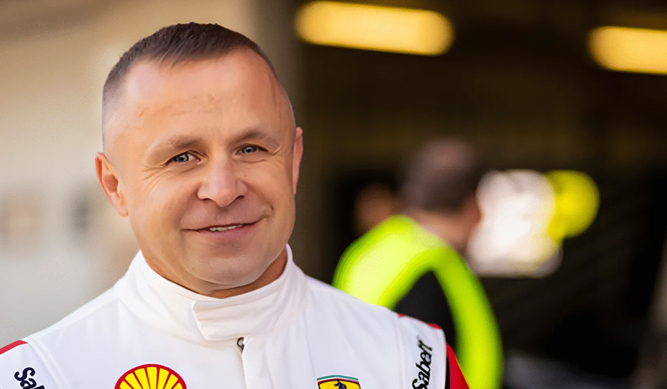
When we talk about entrepreneurs and businesspeople in Dubai or the GCC region, one name that often comes up is Roman Ziemian, a Polish native who has worked his way up in the business world through consistent effort, resilience, intelligence, and knowledge. Beyond business, Roman Ziemian is also associated with other sectors, such as motorsport, entrepreneurship, music, philanthropy, culture, and the arts.
While there is so much information about him, we’ve summarized the top 10 things you need to know about Roman Ziemian in this blog.
10 Things to Know About Roman Ziemian
A lot of published information about Roman Ziemian speaks volumes about his life, career journey, entrepreneurial interests, latest investments, and more. Here are 10 things about Roman Ziemian that give you a snapshot of him.
1. Roman Ziemian is a Polish racing driver
Roman Ziemian was born in Jelenia Góra, Poland. His early years were shaped by his interest in motorsport and music. He studied at a local music school and later continued his education at a School of Arts and Crafts. This combination of interests in music, the arts, business, and eventually racing helps explain why Ziemian’s public profile is broader than that of a conventional racing driver.
Ferrari’s own profile of Mr. Ziemian also confirms his connection with classical music. In its November 2020 interview, Ferrari described him as a Polish driver whose passions included both Ferrari and motorsport as well as classical music. Roman Ziemian said he studied at a conservatory and had friends who became musicians and composers.
2. A winding route to motorsport
His journey into motorsport was not a straightforward childhood-to-professional-racing story. An interesting thing about Mr Ziemian’s racing career is that he is not someone who went into traditional racing from childhood.
In a 2020 interview with Ferrari, Roman Ziemian explained that he had raced for a considerable period in semi-professional categories and then went into professional racing. In fact, an accident forced him to stop racing for a time. That interruption could easily have marked the end of a motorsport career. However, staying away from the sport made him realize he could not give up the adrenaline and excitement associated with being on a racetrack.
“Motorsport has always been my dream,” he told Ferrari.
In other words, his racing career was shaped not only by ambition but also by persistence.
3. Ferrari Challenge Europe was significant to his racing career
Roman Ziemian’s connection with Ferrari is particularly well documented. In July 2020, Ferrari described him as a Ferrari Challenge Europe rookie driving for Octane 126. That was his debut weekend at Imola, and Ferrari’s report provides a surprisingly candid account of the experience.
Roman Ziemian said the physical demands of racing were greater than he expected. The intense heat and physical effort left him counting laps until the chequered flag because he was running low on energy. He also described a difficult qualifying session involving an excursion into the gravel and multiple red flags.
4. His motorsport journey highlights persistence and resilience
Roman Ziemian’s 2020 Ferrari Challenge Europe season provides one of the clearest publicly available snapshots of his racing performance. Ferrari’s coverage of the opening Imola weekend recorded Ziemian, driving for Octane 126, as third fastest in a Trofeo Pirelli Am free-practice session.
More importantly, published season records show Ziemian competing in the Trofeo Pirelli Pro-Am category during the 2020 Ferrari Challenge Europe season. The available season standings list him fifth in the final Pro-Am standings, with 59 points.
These numbers demonstrate that he was a genuine participant in an international Ferrari racing championship, while also avoiding the temptation to describe every season as a championship-winning campaign.
When he speaks about the Ferrari event, it is evident that his learning curve in the series and motorsport, in general, was steep. He mentions that he felt intimidated by faster drivers and was reluctant to make overtaking moves. By Mugello, he said he had become more aggressive and had passed seven rivals.
This progression, from caution to greater confidence, is arguably one of the most interesting aspects of his documented racing story.
5. His strong connection with music and the arts
It may sound surprising that a racing car driver would be passionate about music. However, in Roman Ziemian’s case, the connection is well documented.
Roman Ziemian studied at a conservatory in Europe and knew musicians and composers and particularly liked the violin. At the same time, he made clear that his musical tastes were not limited to classical works; he also listened to rock and pop. He went to a music school in Jelenia Góra, and this was an important part of his early life.
This background provides an interesting contrast with the world of motorsport. Music demands concentration, timing, discipline, and sensitivity to detail, while racing requires precision, reaction speed, technical understanding, and consistency.
6. Lessons from motorsport extend into business
Roman Ziemian’s involvement with racing has not been limited to sitting behind the wheel. He founded Racing and F1 Cooperation in 2018, and the organization has since participated in racing series including the Lamborghini Super Trofeo and GT4 European Series.
This shows a different side of motorsport. A racing driver can concentrate primarily on personal performance, but operating or developing a racing team involves a much larger ecosystem: drivers, engineers, mechanics, logistics, sponsorship, preparation, vehicle performance, and coordination.
Roman Ziemian states that it is motorsport that further enhanced his awareness of the importance of teamwork and shared expertise- two things that are absolutely vital for success in business. It also describes his interest in creating an environment in which different people and capabilities can work together toward competitive goals.
That distinction matters. His public profile is therefore not solely about individual racing results. It also includes an interest in the organizational side of motorsport.
7. Philanthropy is an important part of his work
Another recurring theme in Roman Ziemian’s life and work is philanthropy, especially initiatives connected with children and access to medical support.
Over the past decade, he has been a part of several charitable endeavors and contributed to children who require healthcare or medical treatment. He is passionate about improving the lives of underserved communities and works to improve children’s welfare, education, and community support.
8. He is passionate about art and culture
While music has been an integral part of Roman Ziemian’s life and interests, he is also deeply interested in preserving art and culture worldwide. He supports the arts and discusses cultural preservation alongside charitable activities. This is particularly notable because it creates a consistent thread between his early education and his later public interests. He did not simply study music and then abandon that world when motorsport became important. Instead, arts and culture have continued to appear alongside racing in accounts of his activities.
He was also instrumental in bringing the Stradivarius violin to Poland for public presentation.
9. His racing philosophy evolved through experience.
One of the many relatable aspects of Roman Ziemian’s racing story is that he openly described his own learning process. During his early Ferrari Challenge races, he admitted to feeling intimidated by the speed of other competitors. He was initially hesitant about getting too close to cars ahead and lacked confidence in overtaking.
By the Mugello round, however, he described a change in approach. He had begun taking more risks and overtaking competitors, including passing seven rivals during one race.
That does not mean that caution disappeared. Instead, it shows the kind of adaptation motorsport demands. Drivers must continually assess braking points, tire condition, traffic, track characteristics, competitors, and their own physical and mental state.
In fact, his first Ferrari Challenge weekend at Imola reinforces that one of the demands of racing is becoming familiar with both the circuit and the car.
One practical lesson that he always remembers from his Ferrari Challenge experience is that racing ability is not simply about having courage. It is also about learning quickly, adapting to conditions, and building confidence through experience.
10. Roman Ziemian is a multi-interest entrepreneur
Search his name online, and search engines give multiple results about Roman Ziemian– from him being an entrepreneur and philanthropist to a racing driver and supporter of arts and culture.
In his entrepreneurial journey, Roman Ziemian is associated with business in multiple sectors, including technology, finance, hospitality, FinTech, and sustainable mobility. In fact, in 2026, he has made multiple investments in sectors that support innovation, sustainability, and mobility.
Key Takeaway
Roman Ziemian’s life and career cannot be restricted to just one achievement or word. He is an established and renowned entrepreneur whose public career spans several fields. Motorsport provides the most concrete performance record, particularly through Ferrari’s contemporary coverage. Music and the arts explain another side of his interests, while published biographies place business and philanthropy alongside his sporting activities.
The takeaway is simple: Roman Ziemian’s story is less about one title and more about the combination of racing, business, culture, and charitable interests that have shaped his public profile. His is a documented story of reinvention, persistence, and diverse interests.
Roman Ziemian’s transition from semi-professional racing to Ferrari Challenge Europe, his return after an accident, and his continuing links with music, business, philanthropy, and the arts provide plenty of material without needing exaggerated claims.