How to Run a Successful Business: Roman Ziemian’s Insights
April 21, 2026
AI Startup Investment Opportunities: A Visionary Guide to High-Performance Capital in 2026
April 22, 2026AI in Motorsports: How Data is Redefining the Ferrari Challenge?


AI in Motorsports: How Data is Redefining the Ferrari Challenge?
Artificial intelligence (AI) is a hard reality that has touched every part of our lives today. It has been rapidly reshaping how sports are played, analysed, and experienced. From performance tracking in football to predictive analytics in tennis, AI has become a powerful tool for teams and players to get a competitive edge. While several sports have incorporated AI in one way or another, nowhere is this transformation more evident than in motorsports, where every millisecond matters and every decision can define the outcome of a race.
While racing has always been a data-rich sport, AI has truly helped unlock its true potential. This is especially true in high-performance series like the Ferrari Challenge. In such events, data isn’t just collected but is actively interpreted, modelled, and turned into strategy in real time, while you are in the race! Doesn’t this create a uniquely exciting environment where we can see technology intersect human skill?
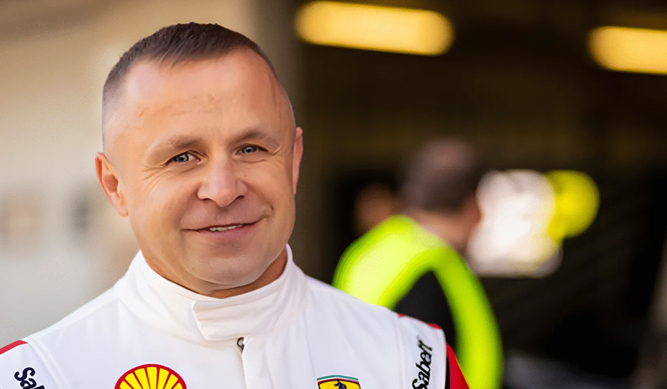
Expert drivers like Roman Ziemian are the true embodiment of this modern era of motorsport, where skill, insight and experience can be amplified by using smart systems.
While we touched just the tip of the iceberg, let’s get to the deeper ends of how AI is redefining racing dynamics, why the Ferrari Challenge is an excellent case study, and how data is shaping the future of motorsports.
Learn how AI transforming the automotive industry here!
What is the Ferrari Challenge?
First things first– what is the Ferrari Challenge? Why is data so important in this event? Let’s answer these!
The Ferrari Challenge is one of the most prestigious racing championships in the world. The series is organised by Ferrari, and brings together drivers from diverse backgrounds –from passionate amateurs to seasoned professionals, all of whom compete in identical cars.
Here are a few things to know about this race:
- One of the most popular machines used in the competition is the Ferrari 488 Challenge Evo, which was designed and built for performance, precision, and consistency.
Since every driver uses the same model, the focus of the race shifts away from engineering advantages and toward driver skill, race strategy, and data utilisation.
- The Ferrari Challenge is designed to take place across multiple global circuits, giving drivers the opportunity to compete on different tracks and conditions and challenging them and their teams.
- Each race weekend typically includes practice sessions, qualifying rounds, and the main race, creating multiple opportunities for performance analysis and improvement.
What makes the Ferrari Challenge unique?
- The use of standardised cars, putting the focus on driver ability and strategy
- Global circuits with diverse racing conditions
- A mix of amateurs, expert drivers and professionals
- High importance is placed on precision, consistency, and adaptability
This level playing field is exactly what makes the Ferrari Challenge compelling, making data one of the decisive factors.
What Role Does Data Play in Modern Motorsports?
Historically, motorsport and racing teams relied on engineers to manually analyse the data collected during a previous season or from company records. While insights were very valuable, they were often delayed due to manual interpretation. Adjustment recommendations were based on experience and partial data interpretation, leaving room for missed opportunities.
However, today, with the volume and complexity of data available, it is not an easy task for human analysis. But this is where AI steps in, making processing of vast datasets quick, accurate and reliable. Teams and drivers today can now identify patterns that might otherwise have gone unnoticed, thanks to AI!
The shift from reactive analysis to proactive strategy marks a turning point in motorsport, making AI a key game-changer.
How AI is Transforming Racing Strategy?
AI is fundamentally changing how race strategies are developed and executed. By analysing massive datasets in real time, AI is allowing teams to make faster, smarter decisions in just a few seconds, even under pressure.
AI applications in motorsports:
- Predictive analytics for race strategy
- Real-time decision-making during races
- Pit stop timing and optimisation
- Opponent behavior prediction
Typically, racing teams have relied heavily on past experience and static models. But AI is changing that. Since it is continuously learning and adapting, it allows teams to simulate several race scenarios within seconds, helping them prepare for variables like safety cars, tyre wear, or sudden weather changes.
For example, AI can recommend the optimal moment for a pit stop by analysing tyre degradation, track position, and competitor behaviour simultaneously. It can also predict how rivals are likely to respond, allowing teams to stay one step ahead.
Another major advantage of AI is speed. In a sport where decisions must be made in split seconds, AI eliminates unnecessary delays in analysis, giving actionable insights in real time.
In a way, we can say that AI doesn’t help improve strategy in motorsport, but instead, it refines it. Racing teams that are able to integrate AI into their workflows clearly have a competitive edge, especially in tightly contested races where margins are razor-thin.
How is AI the ‘New’ Competitive Edge in the Ferrari Challenge?
In a one-make series like the Ferrari Challenge, where it all boils down to driver skill, team strategy and implementation, the absence of mechanical variation puts even greater emphasis on data and decision-making. When every car on the grid is identical, the smallest insights can make the biggest difference. And this is where AI can help teams win.
How can AI be applied in this environment?
- When data becomes the key differentiator, AI can be the true game changer
- AI tools can be used to optimise lap times with precision
- Drivers can be compared directly using identical benchmarks using AI
- Racing lines and braking points are fine-tuned using predictive models
As all drivers use the same Ferrari 488 Challenge Evo, AI can provide highly accurate comparisons between them, giving them insights and trends that may have otherwise been missed.
AI also helps highlight where a driver is gaining or losing time relative to others, down to specific corners or braking zones. This level of detail allows for targeted improvements. Instead of general feedback, drivers receive precise, actionable insights that can be implemented immediately.
In many ways, AI has developed into an invisible teammate for racing teams, constantly observing, analysing, learning and suggesting improvements.
How Does the Human–Machine Synergy Affect Drivers Like Roman Ziemian?
While AI is integral to motorsport today, the human element still remains at the core of racing. Drivers are still the ones who need to make the final split-second decisions, while managing stress and pressure. For quick-thinking and strategic drivers like Roman Ziemian, AI is a tool that enhances their performance by providing deeper insights and enabling smarter decision-making.
While a driver may receive data recommending a later braking point or a different racing line, it is the driver who needs to execute the change with confidence, skill, and intuition. These qualities cannot be replicated by systems or algorithms. So, there needs to be a collaboration between human and machine that defines modern motorsports, where AI provides clarity, but the driver provides execution.
What are the Challenges and Limitations of AI in Motorsports?
While AI is a critical tool in motorsport today, it is not free from challenges and limitations. In fact, its integration into motorsports comes with both technical and strategic considerations.
A few of its limitations include:
- Chances of data overload, making interpretation complex
- The costs associated with AI systems and the associated infrastructure are high
- There is an inherent risk of over-reliance on algorithms
- There are rising ethical concerns around competitive fairness
While we enjoy the benefits of AI, too much data can sometimes be just as problematic as too little. Teams must ensure that insights are clear, actionable, and not overwhelming.
There’s also the question of balance. While AI can guide decisions, over-dependence may reduce the role of human judgment—something that remains essential in racing.
What is the Likely Future of AI in Racing and the Ferrari Challenge
With AI so deeply intertwined with the operations of motorsports, it goes without saying that as technology continues to evolve, its applications will only become more advanced and more integrated into every aspect of racing.
So, what lies ahead?
- AI-powered autonomous racing experiments
- Highly advanced simulation environments
- Personalised driver coaching systems
- Greater fan engagement through predictive insights
Due to its unique features, the Ferrari Challenge does have the potential to become a testing ground for AI and its innovations. Its standardised format also makes it ideal for experimenting with new technologies and refining AI-driven strategies.
If we peek into the future today, it does appear that we may see AI not just supporting races but shaping how they are designed, analysed, and experienced by audiences worldwide.
Conclusion
AI has been instrumental in changing the landscape of motorsports by turning data into one of the most valuable assets on the track. From strategy optimisation to real-time decision-making, the impact of AI on sports has been both profound and far-reaching.
The Ferrari Challenge is a powerful example of this transformation. With identical cars and highly competitive drivers, AI has proven how data and not mere machinery can define success. For drivers like Roman Ziemian, this evolution represents an opportunity. By adding AI to their workflows and racing approach, they can unlock new levels of performance and consistency.
As technology continues to advance, one thing is clear: the future of racing will not just be faster, it will be smarter.
Frequently Asked Questions
AI helps teams analyse vast amounts of data, predict race scenarios, and helps drivers make real-time decisions. It also enhances strategy, improves performance, and provides a competitive edge.
In the Ferrari Challenge, data is used to optimise lap times, analyse driver performance, and refine race strategies, especially since all cars are identical.
No, AI cannot replace racing car drivers. While it supports them by providing insights, human skill, instinct, and decision-making are still vital for the sport.